
It started with a simple question.
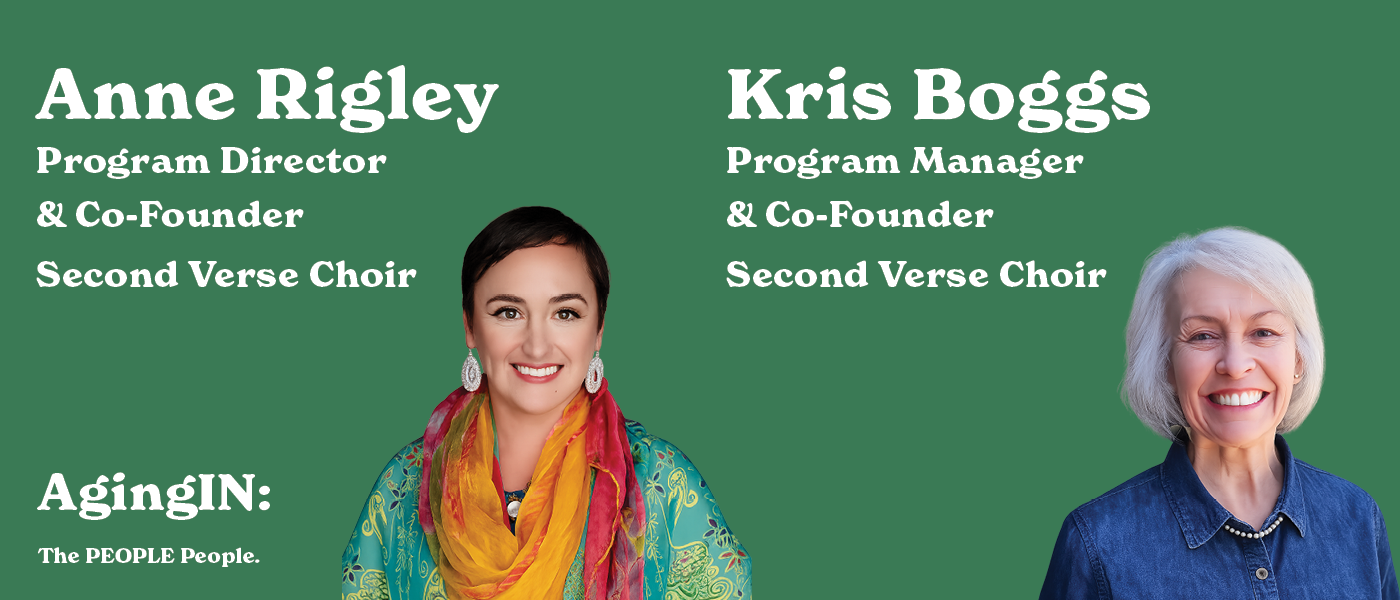
Anne Rigley, a life enrichment specialist working with older adults in Denver, asked a new client what brought her joy. Her answer was quiet but certain: she used to love singing in a choir. That conversation, shared in a recent episode of the Elevate Eldercare podcast, became the seed of Second Verse Choir, a community choir in the Denver Metro area that is changing what it looks like to live with brain change.
Two Paths, One Purpose
Anne Rigley’s career has always centered on the belief that people do not stop needing meaning just because they need more support. After years as an activities director and social worker in long-term care, she became an ombudsman, a resident advocate for people living in communities. She later directed older blind services at the Colorado Center for the Blind, work that deepened her commitment to accessibility and finding new ways forward rather than accepting limitations.
Kris Boggs followed a parallel road. A lifelong musician who plays cello in a community orchestra, she spent years working in child and adult protection, advocacy, and as an ombudsman alongside Anne. What she noticed was that over time, older adults who had once played in orchestras, sung in choirs, and made music together were aging out of those communities with nowhere to go.
When Anne called Kris about starting a choir for people living with brain change, the answer was immediate.
The Question That Started It All
After her conversation with that client, Anne began researching whether a choir friendly to those with memory challenges existed in Denver. It did not. She reached out to the Good Memories Choir in Chicago, visited a rehearsal while in town, and came home with both a sense of direction and a resource: the Giving Voice Network. The nonprofit organization, based in Minneapolis, exists specifically to help communities worldwide start choirs for people experiencing cognitive change. Their free toolkit, available online, covers everything from organizational structure to volunteer recruitment to adapting music for different abilities.
With that foundation in place, Anne and Kris began building Second Verse in August 2025. They found an accompanist, Jerry Serber, early on. Through a Facebook post to a Colorado singers group, they connected with Jacqueline McCurdy, a choral director with a doctorate in vocal performance who is also a speech-language pathologist with experience supporting people navigating cognitive change. The combination of musical skills and clinical understanding proved to be exactly what the choir needed.
What Rehearsal Day Looks Like
Second Verse rehearses weekly from 10 to 11:30 a.m., a time chosen intentionally to work with the natural rhythms of people living with dementia. A Little Help Here, a grassroots volunteer organization, coordinates rides for participants who need them. Three women who are driven together regularly have become friends outside the choir entirely.
The choir is open to anyone living with brain change in the community, with a deliberate focus on people aging in place rather than those already in care settings. People living at home often have fewer structured opportunities for connection, and Second Verse meets that need directly.
Rehearsals include a break for snacks and conversation. Anne and Kris describe watching friendships form in real time, sopranos gathering in corners to talk about the music, participants showing up each week with a little more confidence than the week before.
The First Time They Sang Together
The first rehearsal was logistically demanding. Paperwork, orientation, and logistics filled most of the session. People arrived serious and uncertain. Then everyone gathered to sing together for the first time.
Kris described watching participants walk into that rehearsal space and begin to change. People who had come in tense and tentative started smiling. They made eye contact. Some stood a little straighter. It was, in her words, beautiful.
The first public performance drew family members, friends, and community supporters. The choir’s mission has always included reducing the stigma around cognitive impairment by showing what people living with the condition are still fully capable of: joy, artistry, connection, and pride.
A Community That Keeps Growing
Second Verse has grown from 13 members to 20 since its founding, with participants actively recruiting others. For its first season, the choir performed songs of the 1960s. For the next, choir members chose the theme themselves: songs of summer. Person-directed decision making, a value both Anne and Kris carry from their careers in advocacy, runs through everything the choir does.
Plans for expansion across the Denver Metro area are already underway. Anne and Kris are also scheduled to perform at the AgingIN 2026 Conference in August, where they hope to inspire similar efforts in other communities.
For Anne, Kris, and the 20 people who show up every week to sing, Second Verse is proof that the things that bring people meaning do not disappear with a diagnosis.