
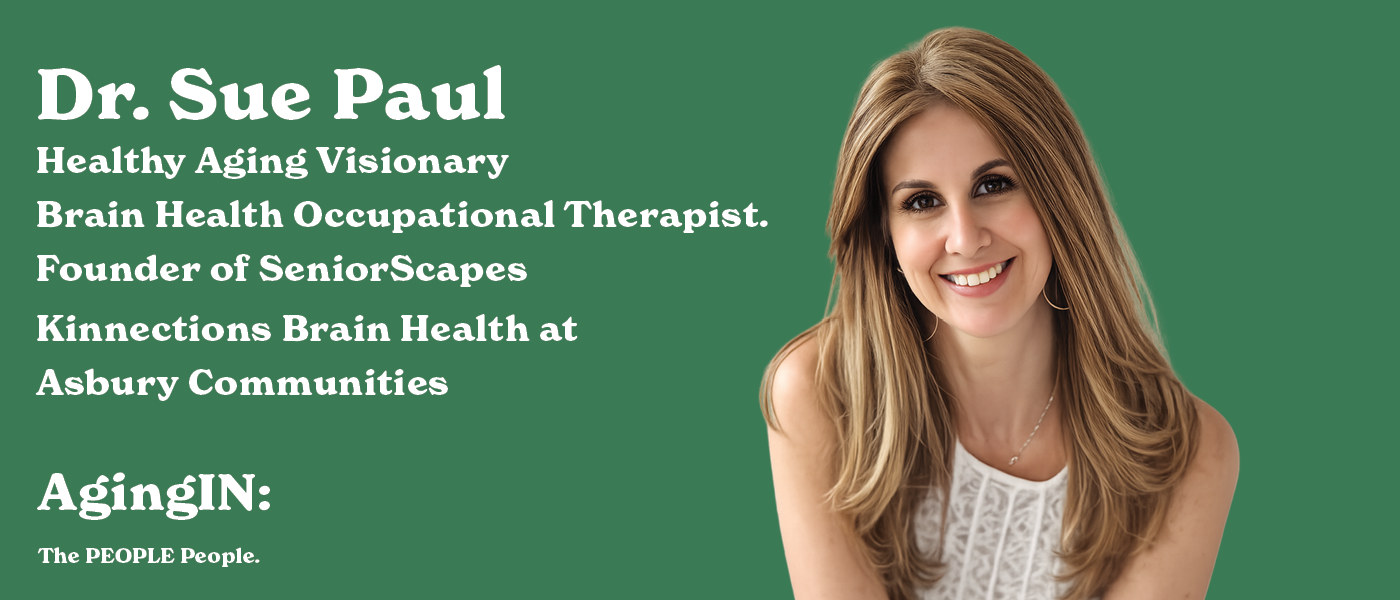
Sue Paul has spent more than 35 years working with older adults. As an occupational therapist, she has seen how aging, cognitive change, and mobility challenges shape daily life. Early in her career, she developed a deep interest in Alzheimer’s disease and dementia, especially when the system offered few meaningful approaches for people living with cognitive decline.
Over time, Paul began asking a different question. Instead of waiting for a cure, what can people do now to support brain health? Today, her work focuses on movement, lifestyle interventions, and environments that help older adults stay active and engaged.
A Career Focused on Alzheimer’s and Aging
Paul began her career during a time when dementia care looked very different. In many places, people with cognitive impairment were restrained or placed in locked wards. She quickly recognized that these practices failed to support the person living with the disease.
She spent about 15 years developing a framework to help therapists better support individuals with Alzheimer’s disease. Through experience, she observed that Alzheimer’s often follows predictable patterns. Therapists who understand those patterns can help families anticipate challenges and reduce complications.
During those years, Paul also treated many common aging-related conditions, including arthritis, falls, weakness, and reduced endurance. Those experiences reinforced how closely physical and cognitive health are connected.
Turning Toward Prevention
About 10 years ago, Paul began shifting her focus toward prevention. At the time, many professionals still hoped a single medication might solve Alzheimer’s disease. Paul believed the condition likely involved many factors and required a broader approach.
She noticed that certain lifestyle habits consistently helped her patients function better. Movement, cognitive stimulation, stress reduction, and supportive environments all made a difference.
To explore this idea further, she became a certified health coach. She worked with people who worried about their cognition or who had early signs of cognitive decline. Together, they focused on factors that influence brain health, including sleep, hydration, nutrition, and physical activity. Paul also wrote a blog to help educate the public about lifestyle strategies that support cognitive health.
Building a Brain Health Program at Asbury
In 2020, Paul joined Asbury Methodist Village in Gaithersburg, Maryland. The community spans about 140 acres and includes independent living, assisted living, memory care, and skilled nursing. She arrived at the beginning of the COVID-19 pandemic and began developing a brain health program for residents.
Some residents initially approached the idea with skepticism. Cognitive health can carry stigma, and many worry that admitting a memory concern might threaten their independence. Paul addressed this by emphasizing that brain health matters to everyone, not just those with a diagnosis. Her goal was to normalize conversations about brain health and help residents take proactive steps to support cognitive function.
The Rosborough Wellness and Brain Health Center
One of the most visible outcomes of this work is the Rosborough Wellness and Brain Health Center. The facility includes several features designed to encourage physical and cognitive engagement:
- A 22-foot rock climbing wall
- A boxing studio with multiple classes, including Rock Steady Boxing for Parkinson’s
- A technology lab with gaming equipment
- A fitness center, pool, and locker rooms
- Community rooms, a theater, and a resident-run television studio
The rock climbing wall stands out as one of the center’s most unusual features. Residents as old as 96 have climbed it. Staff created safety procedures and training sessions to help participants feel comfortable.
Paul explains that climbing encourages people to try something new, plan their next movement, and challenge themselves. Those experiences can stimulate brain activity and support overall health.
The Kinnections Program
During the pandemic, Paul and her colleagues developed a movement-based brain health program called Kinnections. The name references the link between movement and brain function and uses the letters K I N N to highlight its foundation in kinesiology and neuroplasticity.
The program teaches residents about seven cognitive domains used in dementia diagnosis. These include attention, executive function, processing speed, language, and social cognition. Paul wanted residents to understand that cognition involves many abilities, not just memory.
Kinnections also highlights several lifestyle habits that support brain health, including physical activity, cognitive stimulation, social engagement, sleep, nutrition, and management of chronic conditions. Movement plays a key role in the program. Certain forms of exercise can support different cognitive functions. For example, resistance training can support executive function, while choreographed movement such as dance or Tai Chi can support memory.
Measuring Results
Participants complete a five-part assessment upon entering the program and again after one year. The evaluation includes the Montreal Cognitive Assessment, computer-based testing, a mobility test called Timed Up and Go, quality-of-life indicators, and self-reported ratings.
Results from the program have been promising. More than 90 percent of participants either maintain or improve their global cognitive scores. Participants also improve their Timed Up and Go results, which indicates lower fall risk. Among residents who initially score in the mild cognitive impairment range, about half move into the normal cognition range after one year in the program.
Senior Scapes: A Park Designed for Older Adults
Paul’s work also extends beyond senior living campuses. After working with a family struggling to care for two parents with Alzheimer’s disease, she began imagining a place where families could safely spend time outdoors together. That idea eventually became Senior Scapes, a public park in Frederick, Maryland, designed for older adults.
The park includes outdoor resistance equipment, walking surfaces that simulate different terrains, balance challenges, and brain games. A fenced design helps caregivers feel comfortable bringing people with cognitive impairment. Since opening, the park has attracted about 50 users per day on favorable weather days. Paul documented the research behind the concept in her book, Senior Parks: Healthy Aging by Design.
A Call to Action
Paul believes communities can support healthier aging by designing environments that encourage movement, social connection, and outdoor activity. Her call to action is simple.
Communities can start by creating more senior-focused outdoor spaces that help older adults stay active and engaged. For Paul, small changes in environment and daily habits can make a meaningful difference in how people age.