
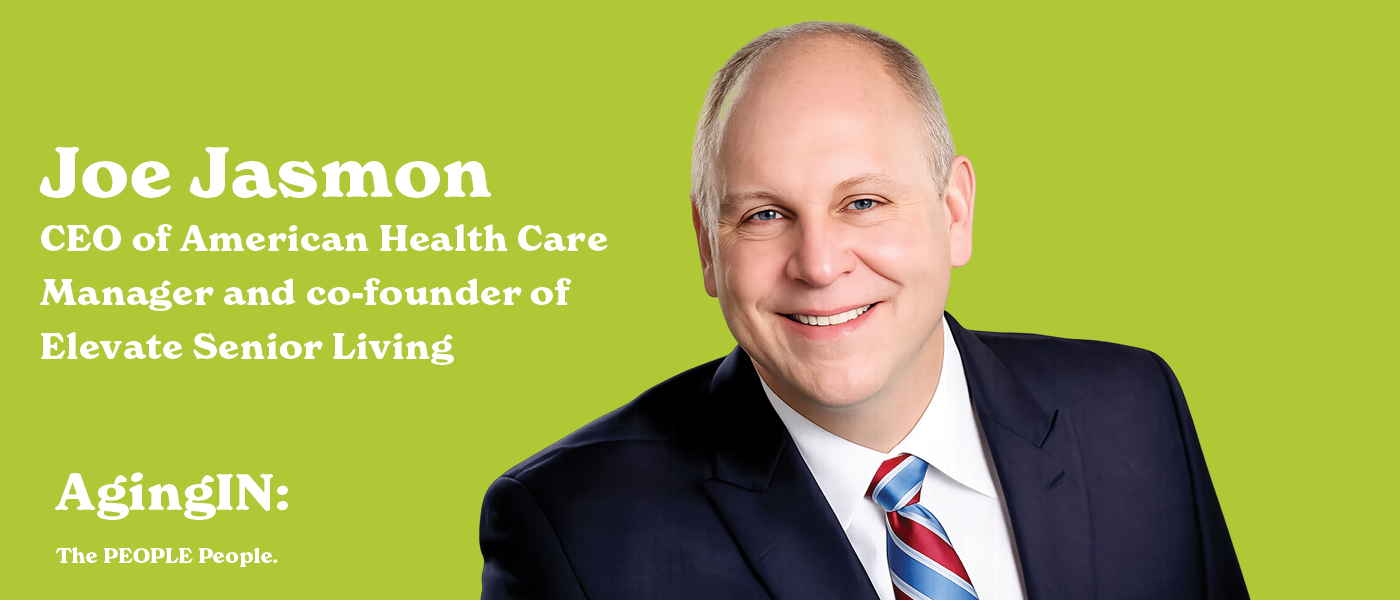
In a recent podcast chat, Susan Ryan, the CEO of AgingIN, caught up with Joe Jasmon, CEO of American Health Care Manager and co-founder of Elevate Senior Living. Joe opened up about his journey from hospitality gigs at Hyatt to fixing up hospitals and senior communities. He talked about shaking up the middle-market scene, turning senior living into places that feel like home: full of freedom and purpose, and no “senior prison” feel. Drawing from his own grandma’s tough experience with dementia care when he was 16, Joe emphasized designing communities that truly honor people, using the customer-first approach he picked up at Hyatt.
They covered everything from smart building layouts to flexible staffing and big-picture dreams for the industry. Joe’s passion comes from spotting the same old problems during turnarounds: bloated corporate costs, leaders who never show up (except to nitpick), and operators ignoring what residents actually want.
Here’s a breakdown of his top ideas in a way that’s easy to digest, whether you’re exploring senior living options or simply curious about better ways to age.
Joe’s Story: From Small-Town Roots to Game-Changing Designs
Joe grew up in Springfield, Illinois, spending his free time swimming and doodling. After college at Southern Miss and grad school at the University of Illinois, he worked in marketing, politics, and then hospitality with Hyatt, where he learned the importance of meeting people where they were. In 2004, he launched American Health Care Manager, specializing in hospital turnarounds, and that work eventually pulled him into the senior living world.
Over the years, Joe saw the good, the bad, and the ugly of the industry. He even helped one company grow from four to 44 communities. But what truly stuck with him was how traditional senior living often fell short–endless rate hikes, rigid routines, and residents treated more like numbers than people.
In 2019, over burgers and beer at LeadingAge Florida, Joe sketched out the concept for Elevate on a napkin. He spent 2020 refining the design, and he was able to use the COVID lockdown to improve his plans. He broke ground in Clearwater, FL mid-2021 and by 2024, opened his first community.
Joe’s motivation came from painful memories of his grandmother’s subpar care, along with a blunt reality check from his mom. When he asked her if she would ever live in one of the traditional communities he had worked with, she told him, “Absolutely not, it’s like a senior prison.”
This experience pushed him toward a more relaxed, resident-guided approach. Joe’s idea was simple: start by listening to what people really want, even if it’s something small, like a yogurt at 10 a.m. He believes those everyday choices can change everything.
Tackling the Middle-Market Gap: Why It’s a Big Deal
Joe is focused on making senior living affordable without sacrificing quality, keeping rates around $4,500 to $5,000 a month (about $1,000 less than many upscale alternatives). His strategy relies on efficiency through design.
At the Clearwater site, Elevate fits 96 beds into 55,300 square feet, roughly half the size of many comparable communities. The model cuts out long, empty hallways and rarely used rooms, and replaces them with six neighborhoods, each with 16 private studios. Every neighborhood includes shared themed spaces like a theater or arts area.
Instead of building kitchens into every studio, Elevate offers shared neighborhood kitchens for fresh, inviting meal preparation. Joe points out that most people don’t have full kitchens in their bedrooms at home, so it doesn’t make sense to force that model into senior living.
He also challenges rigid routines. Rather than waking residents at 6:30 a.m. and pushing everyone into scheduled meals, Elevate supports letting residents eat when they’re hungry. Omelets at 11:30 a.m.? That’s fine. Joe mentioned that secret shopper research showed many communities shut down breakfast early and regularly said no to simple requests.
The community design centers on keeping buildings shaped like a U around a large secure courtyard, keeping everything within about 22 steps (his mom’s personal walking limit). COVID also influenced the layout, with outdoor access built in for maintenance and flexible outdoor spaces that make visits safer and easier.
Everyday Wins: Flexible Ops, Staffing, and Memory Care
Elevate operates with a “go with the flow” approach. Instead of herding everyone through the same routine at the same time, the community allows more flexibility, which reduces stress for both residents and staff. Meals are plated based on personal preference–one slice of French toast or four, depending on what individuals want. That approach reduces waste and removes the guilt and frustration that can come with forced portion sizes.
Joe recommends preparing food in a central kitchen but finishing meals in the neighborhood kitchens, allowing residents to participate, share tips, or simply enjoy the feeling of food being made nearby.
For staffing, Joe sticks to ratios: one caregiver for every 12 assisted living residents and one for every eight memory care residents. Each neighborhood has a dedicated caregiver, while leaders step in as “house parents” who help wherever needed. Volunteers and trainees add extra companionship, helping create a warmer atmosphere without driving up costs.
For memory care, Elevate uses designs that match assisted living rather than separating residents into an isolated wing. Everyone shares the courtyard, which leads to more natural moments of connection.
Programming follows the same philosophy. Instead of forcing everyone into the same activities, the team experiments until they find what clicks, whether it’s Elvis music, a 3 p.m. movie, or something unexpected.
On the team culture side, Joe aims for turnover closer to 40-50% by building stronger relationships. He encourages daily appreciation and practical training methods, like fun challenges instead of dry lectures. He also believes leaders should take the time to learn about staff backgrounds to create a more supportive environment.
Technology plays a supporting role too, with tools for fall alerts, call systems, and monitoring health changes. Joe views tech as a way to strengthen personal care, not replace it.
What Joe Tracks: Metrics That Matter
Joe starts by focusing on resident well-being and minimizing day-to-day challenges. He also tracks how quickly the community fills, noting that lifestyle and experience often attract residents faster than price alone.
Other key numbers include referral growth from within the community, net income targets of 38-42%, and meal costs averaging $7.20 per day through careful planning. Outreach matters too. Elevate hosts 12-13 local events in its first year to build stronger community ties and challenge stereotypes around aging.
The Road Ahead: Beyond the Building
Joe used the slower time during the pandemic to refine his model for Elevate. He said that time allowed him to rethink several operational details, including bringing sales staff on earlier, softening alarm systems, adjusting layouts to support easier movement, and improving team training around food and dining practices.
Looking ahead, Joe envisions Elevate growing through a “hub-and-spoke” system. His goal extends beyond residents already living in the building. He wants to support the 59 million older adults aging at home through technology, visits, companionship, and virtual programming. He believes this could reduce loneliness and create smoother transitions into community living if needed.
Across the industry, Joe hopes to see more operators collaborate around resident priorities. He supports ideas like intergenerational living and believes that in 10-15 years, robots could handle certain physical tasks in a way that protects staff while improving quality of life. In his view, technology can enhance care without eliminating jobs.
Joe’s biggest piece of advice is: listen to residents and staff, and work harder to say yes; small accommodations can create big improvements in daily life.
Through his work on the Elevate model, Joe shows how listening to residents and making smart, simple choices can make senior living more welcoming, sustainable, and hopeful for all. What do you think about connecting home care with community living? Feel free to share in the comments.