
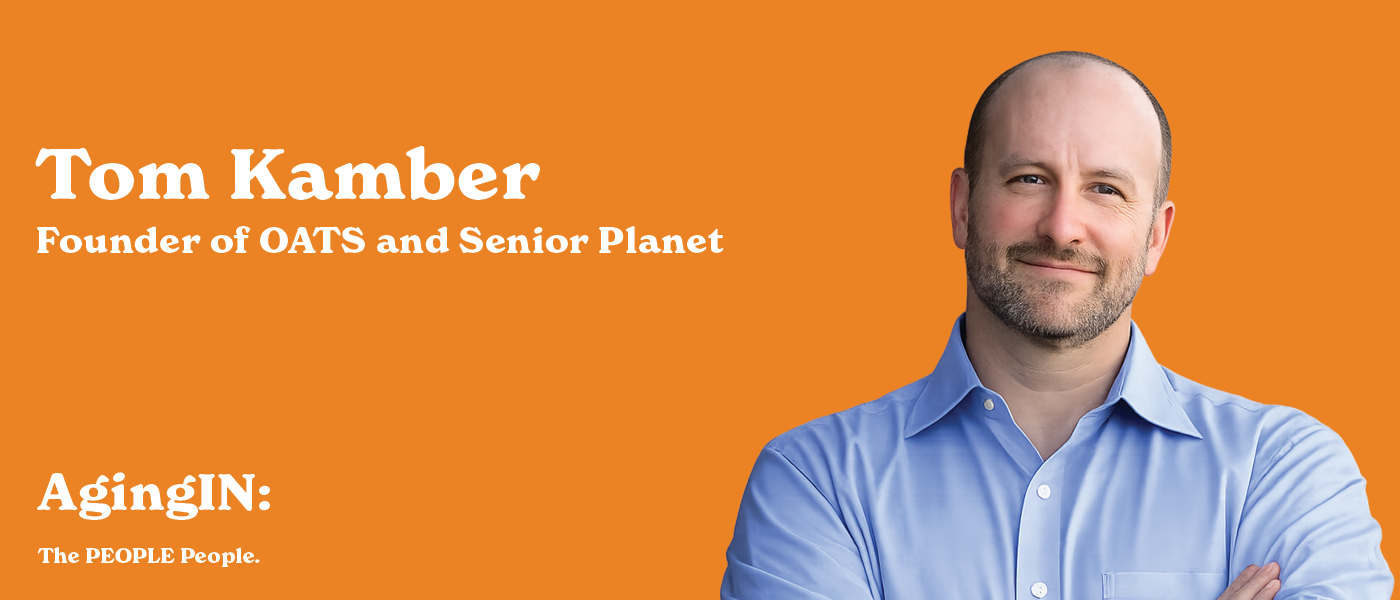
Few leaders have influenced the conversation around aging and technology the way Tom Kamber has. As the founder of OATS (Older Adults Technology Services) and Senior Planet, he has spent more than two decades working to make technology accessible, practical, and empowering for older adults.
In this episode of Elevate Eldercare, Kamber shares the story behind that work. It begins with activism, grows through community organizing, and leads to a national movement that now reaches hundreds of thousands of people each year.
Activism Begins Early
Kamber grew up in Asbury Park, New Jersey. His father, a university professor, kept a shelf of books about activism in the family home. As a teenager, Kamber read works by leaders such as Martin Luther King, Jr., Abbie Hoffman, and others involved in social movements of the 1960s.
Those books sparked a sense of purpose for Kamber. While many of his peers worked after-school jobs, he spent time raising money for environmental causes and organizing trips to Washington for advocacy efforts. He carried that interest into college in New York City, where he became involved in housing and homelessness issues. The idea that work should create meaningful change shaped the direction of his career.
The Moment That Changed His Path
Years later, while working on a technology project in lower Manhattan after the events of September 11, Kamber received a phone call from an older woman named Pearl. She had read about a website launch event and wanted to attend but worried she might not be welcome because she was 80 years old.
Kamber encouraged her to come. The two soon began meeting regularly so he could help her learn basic computer skills. During their first lesson he asked her to move the mouse toward a button on the screen. She picked it up from the desk and pointed it toward the monitor. That moment revealed something important. The issue was not intelligence or curiosity; it was access and familiarity.
Once Pearl learned how to use email and the internet, she quickly applied those tools in her community. She contacted local officials, organized neighbors, and even pushed successfully for a bus shelter to be installed near her residence.
Watching Pearl put technology to work made Kamber realize how powerful digital skills could be for older adults. This inspired him to start a nonprofit focused on technology education for that community. OATS launched in 2004.
From One Center to Forty
The early years required persistence. Kamber struggled to raise funding during the first year of the organization. A grant from the JPMorgan Chase Foundation late that year helped keep the effort alive and allowed the team to begin building a small staff. Instead of opening a new facility, OATS partnered with existing senior centers throughout New York City. Many centers already had computer labs but lacked instructors and curriculum.
Kamber and his colleagues built a practical teaching model. One instructor could teach two classes in the morning at one center and two more in the afternoon at another location. This approach allowed the organization to reach more participants without needing new buildings or equipment. Within a few years, the program operated in about 40 senior centers across New York City.
The Birth of Senior Planet
As the work expanded, the team wanted to create a dedicated community space built around technology and learning. In 2013, OATS opened the first Senior Planet center in Manhattan. The center offered technology classes, events, discussions, and wellness programs in an environment designed to feel welcoming and modern. The goal was to build a space where older adults could gather, connect, and continue exploring new ideas.
The team also introduced a tagline that captured the spirit of the community: Aging with attitude. The phrase encouraged people to embrace aging with confidence and curiosity rather than limitation.
Scaling Through Partnership
As interest grew beyond New York City, Kamber began looking for ways to expand the program nationally. A major opportunity came when AARP approached OATS about forming an affiliation. Through the partnership, OATS retained its nonprofit structure while AARP provided shared services and support that allowed the program to scale much more quickly.
The impact has been significant. Six years ago, the organization served about 20,000 older adults annually. Last year, it reached 845,000 people through its programs. The goal for the coming year is to reach one million participants.
Another important step has been making the curriculum available to other organizations. Libraries, senior centers, and community groups across the country can access the materials and run programs locally. More than 750 partner sites now participate.
Real Lives Changed
Kamber shared many stories of people who have benefited from the programs. One example involves a man who moved to New York from Nigeria to live with his daughter. He struggled with digital tools and needed to navigate the immigration process. Through classes at Senior Planet, he learned how to use computers and online resources.
With guidance from staff and volunteers, he completed the paperwork for his green card and eventually secured a job working in Times Square. Stories like this illustrate how technology skills can open doors to independence and opportunity.
Looking Ahead
Technology continues to evolve and Kamber sees artificial intelligence as the next major focus. OATS has begun collaborating with technology partners to ensure older adults understand and can benefit from emerging tools.
The long-term vision is straightforward. Every community should have access to the digital skills needed to participate fully in modern life. That includes people in large cities as well as those in rural areas who may have fewer local resources.
A Call to Get Involved
Kamber encourages listeners and organizations to explore Senior Planet and consider how they can participate. Individuals can take free online classes and join community programs. Organizations such as libraries and senior centers can become licensed partners and use the curriculum in their own communities.
Most importantly, he believes the future of aging will depend on people who are willing to stay engaged and advocate for inclusive solutions. Technology plays a role. People make the difference. Tom Kamber began his journey as a teenager reading books about activism. Today, his work helps hundreds of thousands of older adults use technology to stay connected, informed, and engaged.
The movement continues to grow with the message that aging does not limit possibilities. Rather, learning to use the proper tools can open the door to new ways to learn, connect, and contribute.