
Where Technology Meets Humanity
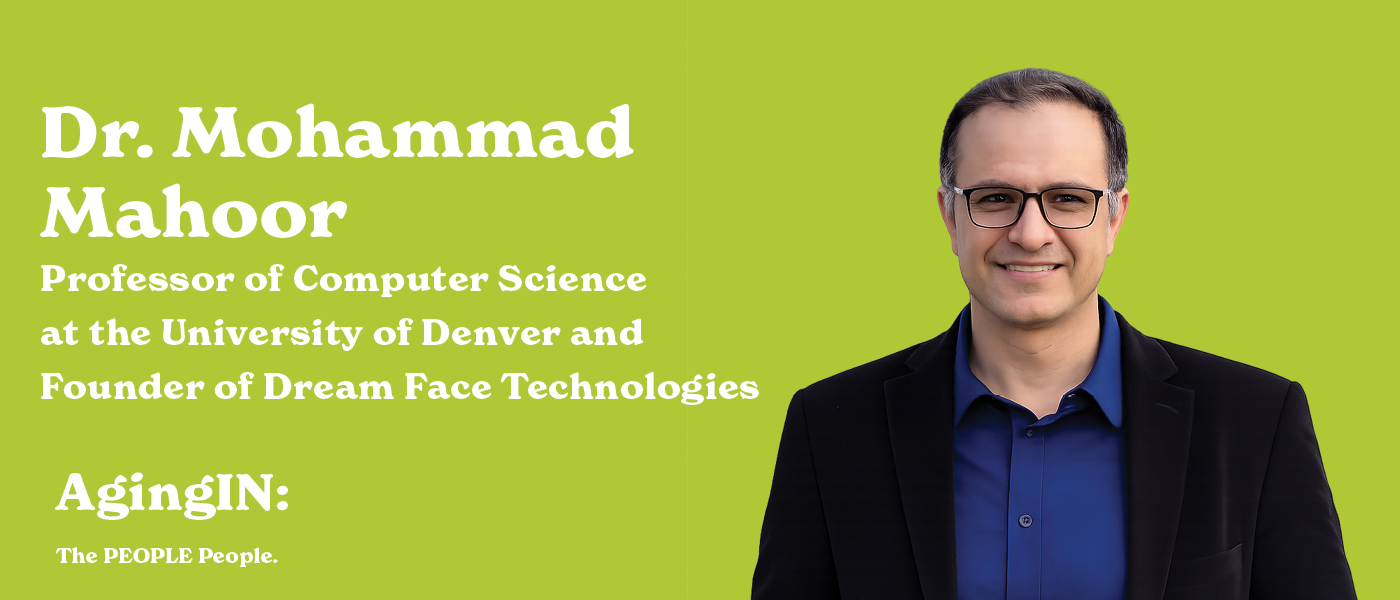
In this episode of Elevate Elder Care, Susan Ryan, CEO of AgingIN, sat down with Dr. Mohammad Mahoor, professor of computer science at the University of Denver and founder of Dream Face Technologies, for a thoughtful, forward-looking conversation about the evolution of artificial intelligence in aging services.
With a uniquely interdisciplinary background in computer engineering, biomedical engineering, psychology, robotics, and affective computing, Dr. Mahoor has spent more than a decade exploring how technology can support emotional wellbeing, social connection, and cognitive health for older adults.
That journey ultimately led to the creation of Ryan, an AI-powered wellness robot designed not to replace human caregivers, but to strengthen the human experience.
From Autism Research to Aging Services: An Unexpected Path
Dr. Mahoor’s early work focused on children with autism. Using computer vision and emotion-recognition algorithms, he worked to better interpret facial expressions and support social interaction for children who often struggle with communication.
That research opened the door to robotics, and robotics opened the door to aging services. He saw parallels between the needs of children with autism and older adults experiencing:
- Loneliness
- Social isolation
- Early-stage cognitive change
- Limited access to caregivers
From there, the mission evolved.
“I’ve always loved creating things,” he said. “But more than anything, I’ve wanted to create something that helps people feel less alone and more empowered.”
The AI Explosion: Promise, Peril, and Practical Use
As an educator and researcher, Dr. Mahoor is on the front lines of AI’s rapid acceleration. He described a world in which AI has shifted from a backend tool to an interactive presence, capable of reasoning, responding, generating written material, teaching content, and supporting human decision-making.
He also emphasized the responsibility that comes with that power:
- Hallucinations: AI may sound fluent but not always accurate
- Bias: Outcomes can be influenced by training data
- Privacy and dignity: Especially critical in aging services
- Transparency: People must understand what data is being used
He noted the need for clear protocols for both developers and organizations adopting AI tools.
On the education side, Dr. Mahoor described a balanced approach with his students. Early coursework without AI was followed by structured support that teaches responsible and effective use.
Dream Face Technologies and the Birth of Ryan
Dream Face Technologies was created to bring research in emotion recognition and social robotics out of the lab and into real-world settings.
The result is Ryan, now in its fifth major iteration.
Ryan is a full-body, expressive humanoid robot designed for:
- Emotional support
- Social engagement
- Cognitive stimulation and assessment
- Group activities
- Movement and wellness activities like yoga
- Conversation and companionship
- Entertainment, humor, and encouragement
Ryan’s design has been shaped through partnerships with senior living communities such as Eaton Senior Communities in Colorado. Residents interacted with early prototypes, offered feedback, and directly influenced improvements over time.
Dr. Mahoor emphasized that this co-design approach, building technology with older adults, not just for them, is central to the work.
A Robot That Remembers You
Each user has a personalized profile where Ryan stores:
- Favorite music
- Biographical details
- Past conversations
- Emotional patterns
- Interaction history
Ryan uses this information to tailor interactions, track changes over time, and provide summaries that help caregivers notice emerging concerns, such as cognitive decline or changes in mood.
This level of personalization helped Ryan feel responsive and engaging, while remaining transparent about what it is and how it works.
Impact on Residents, Care Staff, and Families
Dr. Mahoor shared several stories that demonstrate Ryan’s impact.
A resident recovering from hospitalization became isolated and depressed. After spending time with Ryan, she began talking again, sharing jokes, and re-engaging with her community.
Another resident became so engaged with Ryan’s companionship that they jokingly asked the robot out on a date, a moment that highlighted the level of connection people can feel when technology truly listens.
Caregivers benefit as well:
- Ryan can lead group activities like bingo, trivia, or yoga
- Ryan provides one-on-one engagement when staff cannot be everywhere
- Future capabilities like fall detection and cognitive assessment will extend support further
Families often became curious and engaged, turning visits into shared, multigenerational experiences.
Ethics, Transparency, and Human Connection
Despite the benefits, Dr. Mahoor was clear. Ryan is not meant to replace human connection.
Transparency is a non-negotiable principle:
- Residents are told clearly that Ryan is a robot
- They are informed about what data is collected
- Their dignity and privacy are prioritized
Technology should enhance connection, not replace it.
A Vision for the Future of Aging Services Technology
Dr. Mahoor shared that in five to ten years, technology like Ryan could help create environments that are:
- More personalized
- More engaging
- More humane
- More supportive of cognitive and emotional wellbeing
- More empowering for caregivers
This progress depends on continued collaboration with older adults and a commitment to listening to their experiences.
Call to Action
Dr. Mahoor encouraged aging services leaders to:
- Stay open-minded
- Use technology thoughtfully and ethically
- Adopt innovations that genuinely improve lives
- Center dignity, connection, and empathy
- Involve older adults directly in design and testing
Susan also invited listeners to continue the conversation at the AgingIN Conference in Denver this August, where Dr. Mahoor and Eaton Senior Communities will co-present a tech talk and demonstrate Ryan in person.