
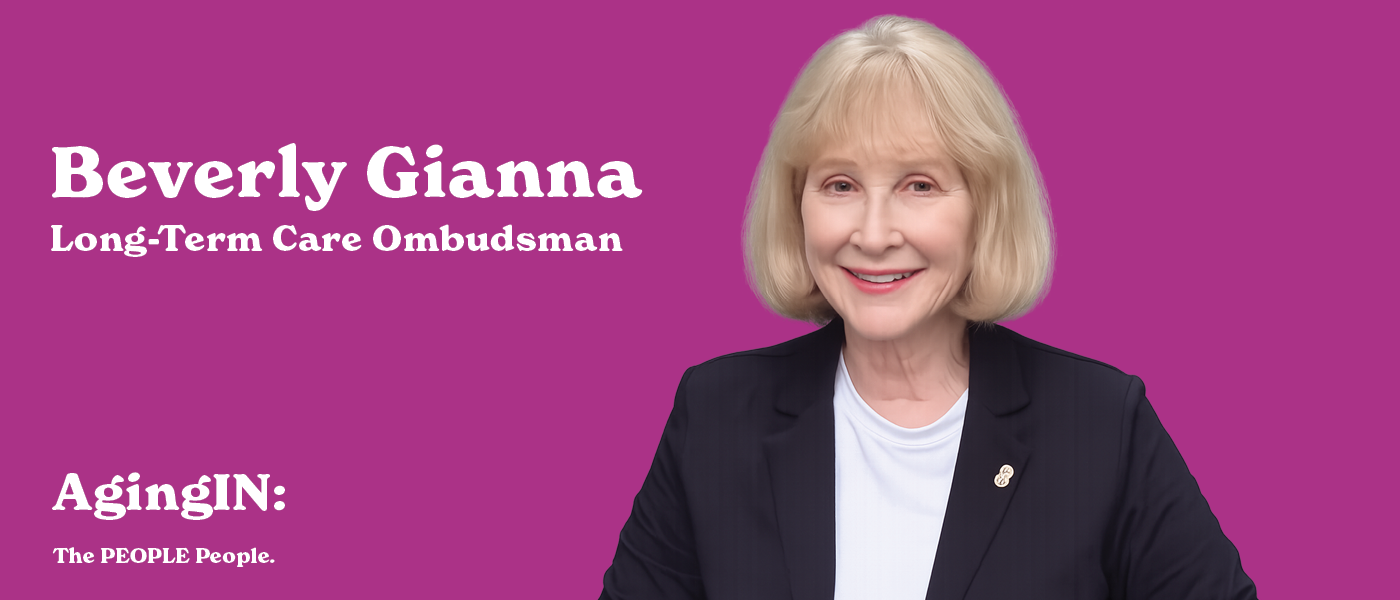
In a recent episode of Elevate Eldercare, host and CEO of AgingIN, Susan Ryan, sat down with Beverly Gianna, a long-term care ombudsman whose work centers on one powerful idea: every resident deserves to be heard.
Beverly came to advocacy later in life, and she takes her role seriously. Her work focuses on listening to residents, helping them speak up, and making sure their rights and preferences remain part of everyday life in long-term care.
The conversation was not just about policy or process. It explored purpose, autonomy, and what it truly means to support people as they age.
A Life Shaped by Curiosity and Hard Work
Beverly’s perspective did not develop overnight. It grew from early influences that shaped how she sees the world.
Her mother loved books and ideas. She read widely and encouraged curiosity about philosophy, religion, and literature. Beverly grew up surrounded by conversations about meaning and life.
Her father, on the other hand, believed in strong work ethics.Even when he reached his 80s, he would ask Beverly the same question when they spoke on the phone: “Did you give your boss a good day’s work?” This simple question stuck with her.
Her husband expanded her world in a different way. Through him, she discovered travel, theater, museums, and music. Those experiences deepened her understanding of culture and people.
Together, those influences shaped a mindset that still guides her in work and life today. Stay curious. Show up. Do the work.
From Public Relations to Advocacy
Before entering elder advocacy, Beverly spent more than 30 years working in public relations at the New Orleans Convention and Visitors Bureau. She loved the work and often joked that the job felt more like an opportunity than a career.
The shift toward long-term care advocacy began during a deeply personal season of life. Beverly was helping care for her mother and her mother-in-law when she noticed a brochure about the Long-Term Care Ombudsman Program in a hospital elevator. She had never heard of the program before and decided to do some research to learn more about it.
She found that the ombudsman role focuses on protecting resident rights in nursing homes and assisted living communities. Ombudsmen advocate only for residents. They listen to concerns, investigate complaints, and help residents speak up about what matters to them.
Beverly immediately recognized the importance of the work and made the decision to pursue a career in it. She returned to school and completed graduate study in theology, liberal arts, and gerontology. This program deepened her understanding of aging and strengthened her ability to advocate for residents.
What an Ombudsman Really Does
The ombudsman role centers on one principle: The resident directs the action. An ombudsman does not work for the facility, does not work for the family, and does not represent the state. The ombudsman works purely for the resident.
This means that residents decide what steps to take even when others might disagree with their choices. Conversations remain confidential and the ombudsman acts only with the resident’s permission.
Beverly often explains it in simple terms when she meets someone new. “When you move into a nursing home, your rights move with you.” Residents still have the right to choose how they spend their time, what they eat, when they bathe, and how they live their day. Many people simply need someone to remind them of that.
When Residents Find Their Voice
Much of Beverly’s work involves listening carefully and asking thoughtful questions. Sometimes the conversation leads to something remarkable. Through a resident empowerment initiative known as the Peer Lapeer program, Beverly helped residents learn how to identify concerns and work toward solutions.
One woman entered the program quietly and rarely spoke. During a discussion, she mentioned that she used to work as a secretary and offered to start a newsletter for the community. The newsletter quickly led to new ideas. She soon after helped connect residents with the public library and started a book club. As her involvement grew, so did her confidence.
Eventually, her health improved enough and she no longer required nursing home care. She moved into her own apartment where she started a small garden and invited former neighbors for lunch. Purpose changed her outlook and her future.
A Return Home
Another resident Beverly met believed he had lost control of his life. Mr. Smith was 90 years old and blind. After a hospital stay, his power of attorney placed him in a nursing home for what he believed would be a short stay. Months later, he realized he had been admitted for long-term care and might never return home. When Beverly asked what he wanted to do, his answer was immediate: “I want to go home.”
With his permission, she helped him revoke the power of attorney and worked with a care team to assess his house. The team arranged home modifications and in-home services. Mr. Smith was able to return home where he lived for two more years, surrounded by neighbors and familiar routines.
Choosing Happiness at Ninety
In another case, Beverly met a woman living in assisted living who felt constrained by strict rules and limited independence. She was 90 years old and frustrated. Instead of trying to solve the problem she had with the assisted living community, Beverly asked her a simple question, “Do you want to stay here?” The woman responded that she did not.
Beverly helped her arrange a tour of another community that seemed to fit her lifestyle better. She ended up placing a deposit and moving into the new community. Today, she still lives there and recently celebrated her 106th birthday. The experience reinforced Beverly’s idea that autonomy does not disappear with age.
A System Under Pressure
Despite the importance of the role, the number of ombudsmen remains small compared with the need. Louisiana has more than 400 long-term care facilities and roughly 40,000 residents. Sadly, only 23 ombudsmen serve the entire state.
Beverly alone regularly visits more than two dozen communities. To strengthen the program, she now trains volunteers, leads case discussion sessions, and produces a monthly newsletter for advocates across the state. She also continues to expand the resident empowerment program so residents themselves can help improve life in their communities.
A Different View of Aging
Beverly sees many developments that can potentially make daily life easier for aging adults. . For example, she mentioned technology that helps people remain independent longer, such as voice assistants, transportation apps, and home delivery services.
She also sees potential in neighborhood initiatives that help people age where they live. Researchers and community leaders continue exploring ideas such as village networks and time bank systems that allow neighbors to support one another.
For Beverly, these developments point toward a future where aging includes connection, independence, and purpose.
“I’m 79 and I Have a Future”
At 79, Beverly has no interest in slowing down. She continues to visit residents, train new advocates, and speak publicly about aging and resident rights. She believes purpose should remain part of life at any age. Her goal remains simply to help people rediscover their voice. Sometimes all it takes is someone willing to knock on the door, step inside, and listen.