
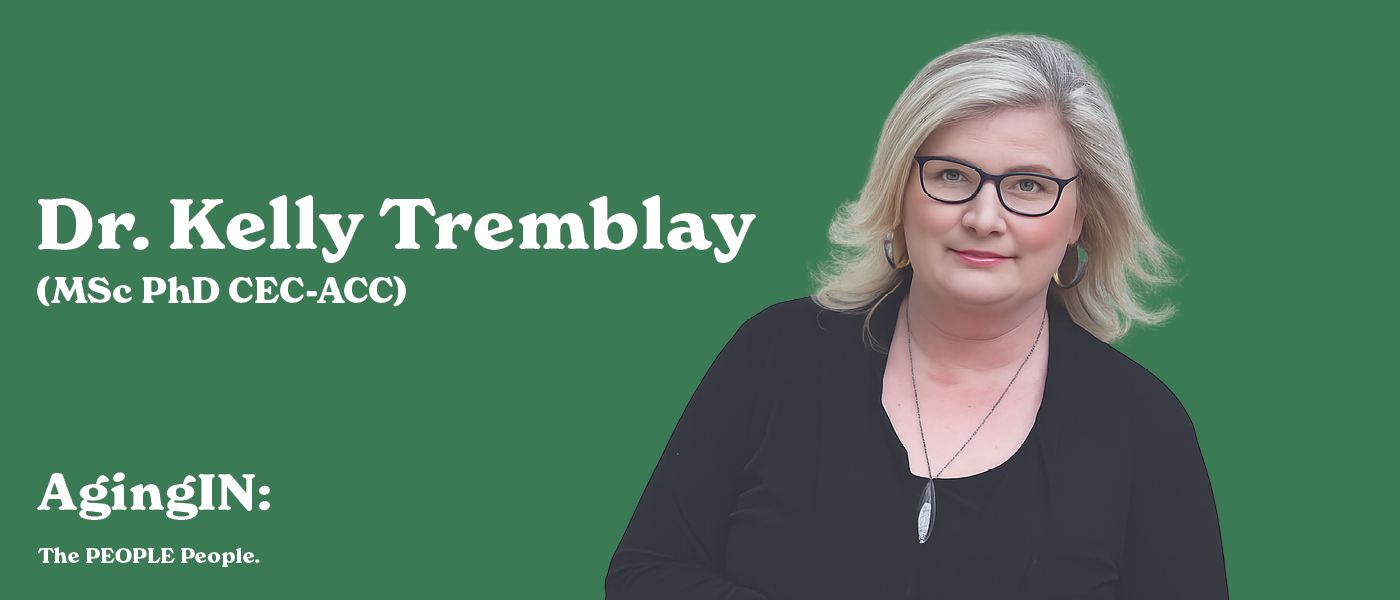
Beginning February 27, Elevate Eldercare and AgingIN will launch a new monthly microcast, Brain Bytes, hosted by neuroscientist, audiologist, educator, and global health advocate Dr. Kelly Tremblay. Designed to deliver clear, practical insights in under 15 minutes, Brain Bytes exists for one reason: to make brain health understandable and actionable for everyone.
In a world where health information is everywhere but clarity is rare, Brain Bytes cuts through the noise. Each episode offers bite-sized, evidence-based guidance rooted in peer-reviewed research and global health frameworks—without requiring a medical degree to understand it.
From Blue-Collar Roots to Global Brain Health Advocate
Dr. Tremblay’s path to neuroscience did not follow a predictable script. Raised in a blue-collar Canadian city, she became the first in her family to attend college. Education was not an expectation—it was an exception.
Watching her father live with multiple sclerosis shaped her early awareness of healthcare barriers. She saw firsthand how intimidating medical systems and health information could be for families without strong health literacy. That experience fueled her commitment to advocacy and accessibility.
She began her career as an audiologist, helping people across the lifespan manage hearing and communication challenges—from newborn screenings to post-stroke rehabilitation. Her curiosity about why some patients thrived with interventions while others struggled led her back to school for a PhD in neuroscience. For more than 20 years, she led research at the University of Washington studying the aging brain, cognitive decline, and brain plasticity.
Her work has extended beyond academia, collaborating with the National Institutes of Health and the World Health Organization to translate complex research into guidance communities can use.
Why Brain Health, and Why Now?
As more adults actively search online for health information, the challenge is no longer access—it is accuracy. Studies show that the majority of adults use the internet to seek health guidance, yet many lack confidence in distinguishing reliable information from misinformation.
At the same time, brain health has become central to conversations about aging. With increased awareness of dementia, cognitive decline, and memory loss, individuals and senior living communities alike are asking an important question: What can we actually do to support brain health?
Brain Bytes responds with science-based clarity. It acknowledges that while not every risk factor is controllable, many are modifiable. Small, informed choices made today can influence long-term outcomes.
What Listeners Can Expect
Each monthly microcast draws from two major evidence-based frameworks that shape modern brain health research.
The first is the Lancet Commission on Dementia, which identifies potentially modifiable risk factors across the lifespan. These include hearing loss, hypertension, diabetes, depression, social isolation, vision loss, traumatic brain injury, obesity, smoking, and more. Understanding these factors empowers individuals to take preventive action where possible.
The second framework is the World Health Organization’s ICOPE model—Integrated Care for Older People. This model highlights six key areas critical to healthy aging: nutrition, hearing, vision, mood, cognition, and mobility.
Brain Bytes will explore each of these areas in accessible language, offering practical takeaways while pointing listeners toward deeper resources if they wish to explore further.
Bridging Research and Real Life
A core theme of Dr. Tremblay’s career has been translating research into practice. Scientific knowledge should not sit behind paywalls or remain confined to academic journals. It should inform daily decisions—whether someone is caring for a parent, working in senior living, or planning their own future.
Brain Bytes embodies Aging In’s commitment to bridging research, practice, and policy. The goal is not to prescribe, but to inform—equipping listeners with knowledge they can trust.
Looking Ahead
In addition to the microcast, listeners will have opportunities to explore these topics more deeply at the upcoming Aging In Conference in August, which will feature dedicated sessions on the WHO ICOPE framework and practical applications for caregivers and professionals.
Brain health is not predetermined. It is influenced by lifelong habits, access to accurate information, and informed choices. With Brain Bytes, Dr. Tremblay invites listeners to stay curious, stay informed, and take ownership of their cognitive well-being—one small, science-backed step at a time.
Brain Bytes launches Friday, February 27, with new episodes released on the fourth Friday of every month.