
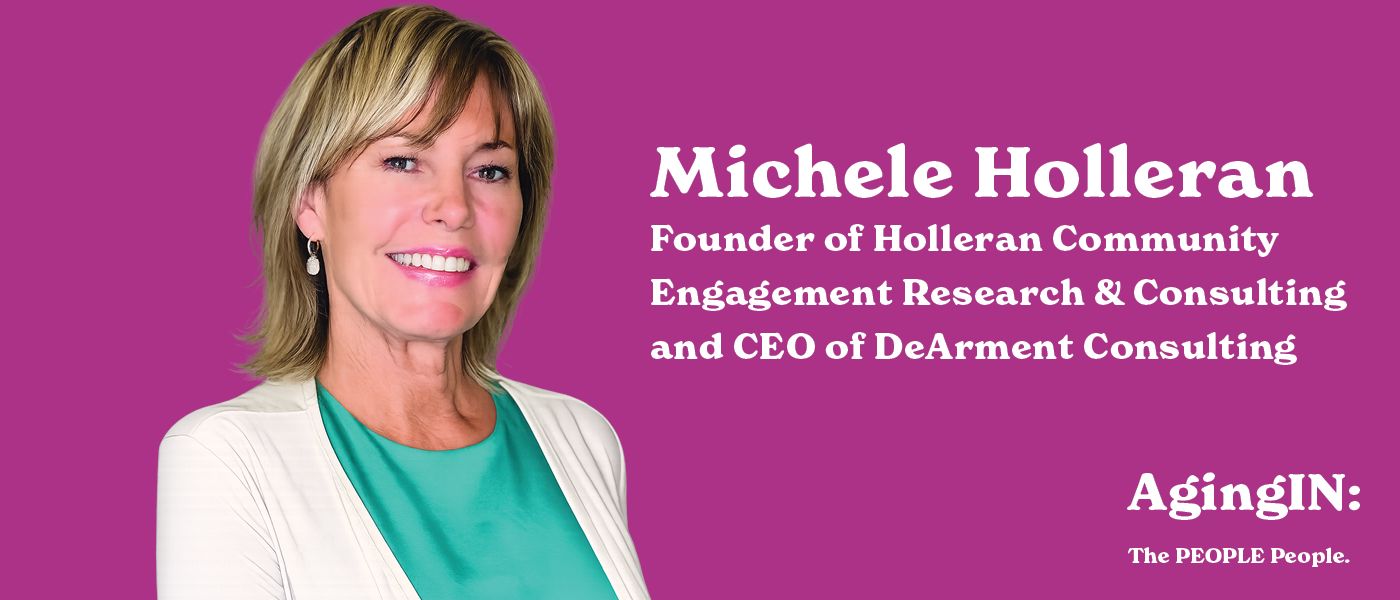
In a recent podcast episode, Susan Ryan [CEO of AgingIN] sat down with Michele Holleran [Founder of Holleran Community Engagement Research & Consulting and CEO of DeArment Consulting] to dive deep into the evolving world of senior living.
Michele, a trailblazer in the field, shared her extensive journey and insights on brain health, longevity, and holistic well-being.
Drawing from her decades of experience, including her MBA from Pennsylvania State University and PhD in organizational development, Michele emphasized how senior living communities can position themselves as “Blue Zone communities of well-being.” She believes that this is a “perfect storm of opportunity” for Life Plan Communities to leverage new research and interventions to prevent cognitive decline.
The conversation touched on the importance of resident feedback, leadership development, community engagement, and strategic planning in senior living communities. Michele also talked about passion for supporting women leaders and her latest venture, DeArment Consulting, which focuses on longevity, well-being, and brain health.
Michele’s Path: Innovation Through Listening and Leading
Michele’s entry into senior living began in the 1980s with her first client, Cornwall Manor, inspired by her grandmother’s positive experience there. She founded a research firm in the early 90s to gather national resident feedback, an idea that was initially met with resistance from CEOs who felt they already knew best. Today, she notes, seeking resident opinions is standard practice, thanks in part to accreditation pushes.
Leadership has been a core focus: She helped launch the Larry Minix Leadership Academy, now in its 18th year, and developed 12 more academies centered on transformational leadership, emphasizing relationships and person-centered cultures. She’s also championed women in the field through the LeadingAge Women in Leadership Task Force and her Senior Living Women’s Leadership Retreat, now approaching its 10th year, where she’s coached about 50 women who now hold C-suite roles.
Her latest work as CEO of DeArment Consulting targets longevity, well-being, and brain health as ways to attract boomers, who seek different experiences than current residents.
Why Brain Health Matters Now: A Game-Changer for Senior Living
Michele’s interest in brain health grew from strategic planning at Westminster Communities of Florida, where she saw it as a way to lower entry ages (currently averaging 82) and differentiate communities. Both current residents, who want to recall family names, and future ones, who aim to avoid cognitive worries altogether, share this priority.
She cited a Love and Company survey of prospective residents at 16 communities: Nearly three-quarters said they’d favor a community with strong brain health programs. Brain health, she explained, simply means delaying or preventing cognitive decline. As the boomer generation ages, the incidence of dementia is expected to increase, but lifestyle factors (like diet, exercise, and social ties) can make a big difference, outweighing genetics in many cases.
For instance, Mediterranean and MIND diets, rich in leafy greens, berries, whole grains, fish, poultry, nuts, and beans, can reduce cognitive decline risk by up to 31%, according to a white paper from think tank sponsor Thomas Cuisine. Michele also highlighted “super agers” (people over 80 with the mental sharpness of those 20-30 years younger), who hold that title thanks to good nutrition, lower body mass, brain exercises, and social engagement. Isolation, she warned, is a major threat to healthy aging, according to Northwestern University research.
Leading Examples and Holistic Approaches
Several communities are already leading the charge in implementing programs for brain health. Asbury Communities in Maryland runs the Kinnections program, led by Dr. Sue Paul, offering education, articles, podcasts, and research on topics like super aging. Wesley Willows in Rockford, Illinois has a board-approved strategic plan for whole-person well-being, including cognitive strategies and a brain health marketing campaign. Goodwin Living features the trademarked Stronger Memory program, impacting thousands with better recall and focus. Sequoia Living in San Francisco pilots the Brain Boosters Club, developed by Ted Teele.
These aren’t just add-ons; they’re integrated. Michele stresses a holistic view beyond the seven wellness dimensions, incorporating nature-inspired (biophilic) designs for easier navigation and mental health benefits, volunteer opportunities to combat isolation, and even life coaching (including brain coaches) in the next decade. Environment plays a key role: bringing nature indoors supports brain health, and professional architects can help integrate these elements.
Practical Steps: Starting Small and Building Buy-In
For communities eager to get started on brain health programs, Michele recommends starting with a resident well-being assessment to gauge lifestyle habits. These include diet, exercise, engagement, and healthcare access for both current and prospective residents. The assessment will bridge generational gaps, as brain health appeals to all.
Each community should tailor its approach. If budgets are tight, get creative: Partner with a local YMCA for swimming if building a pool isn’t feasible. Success requires strategic commitment from CEOs and boards, who often relate personally to these needs. At Wesley Willows, board support is driving efforts to attract younger residents.
Michele sees huge potential in middle-market offerings, like memberships for non-residents, opening new revenue streams and community connections. Think NORCs or villages where brain health programs are extended outward.
To foster hubs of well-being, she suggests campus cafes with public access, like Wesley Willows’ planned Starbucks partnership, or spaces for intergenerational activities such as ping-pong, pickleball, bocce, libraries, and putting greens. This combats isolation while inviting the broader community in, with security measures in place.
Partnerships are key: Food providers like Thomas Cuisine offer MIND diet menus and teaching kitchens, where residents learn to prepare healthy, tasty meals, boosting adoption. Pay attention to design, activities, and volunteer ties, and regularly take note of resident interests to let them lead.
Looking Ahead: Longevity, Workforce, and a Call to Action
Michele envisions senior living as thriving environments for longer, healthier lives, not just extended ones, where residents stay engaged and purposeful. Brain health ties into this, enabling contributions like Jill Vitale-Aussem’s citizenship model.
She also addressed workforce challenges: Offering well-being programs, including those for neurodivergent employees (those with ADD, depression, or on the spectrum), could attract and retain diverse talent. Marketing brain health benefits to staff shows an organization’s culture of care, which is appealing to residents too.
In five to 10 years, she predicts brain health will be mainstream, with features like brain scans, coaches, nutritious foods, games, and intergenerational cafes. To get there, listen to residents. Rob Love’s research shows 75% want this focus. Take advantage of the marketing edge now, before it becomes the norm.
Her call to action: Conduct a well-being assessment to identify priorities, like nature walks or brain coaches. Integrate what you can afford; start with low-cost options like community volunteering. As she emphasized, this path will transform the field.
This podcast is a wake-up call for senior living to evolve. By prioritizing brain health through resident-centered, holistic strategies, communities can create vibrant futures. What steps will you take?