
Across the country and around the world, dementia care is at a crossroads.
Recent headlines, policy debates, and social media discussions have reignited concern about the use of antipsychotic medications, particularly in long-term care settings. These drugs are often framed as tools for “managing behaviors.” The reality points to something deeper. As explored on the Elevate Eldercare podcast, antipsychotics are not solutions. They reflect systemic gaps in how people living with dementia are understood and supported.
The focus of this episode is that sedation is not support.
A Shared Journey Into Dementia Care Reform
This perspective is shaped by both professional and personal experience.
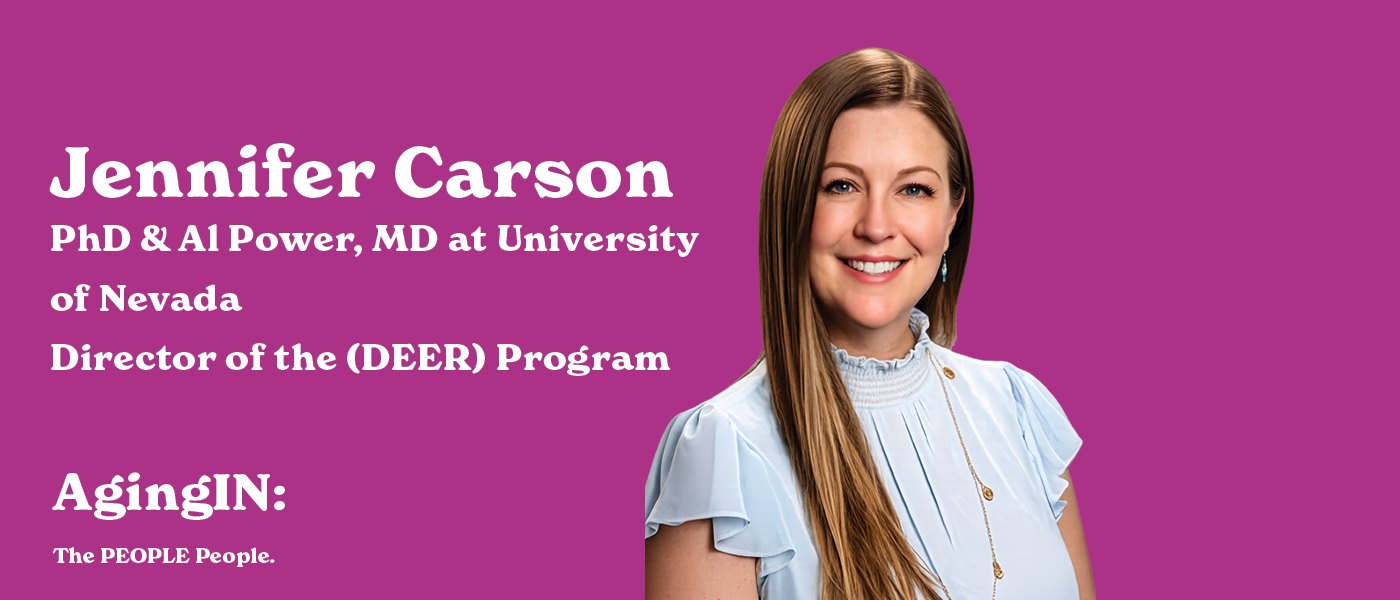
Jennifer Carson is a clinical associate professor at the University of Nevada, Reno, and the founding director of the Dementia Engagement Education and Research (DEER) Program. Before academia, she spent decades in residential dementia care and supported her father through Lewy Body and vascular dementia. Her work reflects both evidence and personal insight.
Al Power is a geriatrician with more than 20 years of experience in long-term care and culture change initiatives, including the Eden Alternative and THE GREEN HOUSE® Project. His work challenges traditional models by reframing dementia through a well-being and human experience lens.
After decades of research and reform, one question remains: Why does the field continue to rely on interventions that do not address root causes and may cause harm?
Antipsychotics Are a Symptom, Not the Problem
The use of antipsychotics is often treated as a clinical issue. It reflects two broader challenges:
- A system of thought that pathologizes human responses to distress
- A system of care that remains inflexible, under-resourced, and misaligned with well-being
Antipsychotic medications were developed to treat schizophrenia by targeting dopamine dysregulation. Dementia does not follow this pathway. These medications do not address fear, loneliness, confinement, lack of control, or environmental stressors, which are among the most common sources of distress for those living with dementia.
The risks of using antipsychotics to treat dementia are well documented:
- Increased risk of falls and pneumonia
- Higher incidence of stroke
- Accelerated cognitive decline
- Movement disorders
- Increased mortality
The debate continues about dosage, even as research and watchdog reports point to widespread misuse.
The Problem with “Behavior” as a Framework
Language shapes practice. Terms like “behavioral and psychological symptoms of dementia” suggest that distress is an inevitable outcome of brain change. This framing shifts responsibility away from care systems and places it on the individual.
People living with dementia express emotion in many forms, including fear, frustration, confusion, grief, and joy. In structured environments, these expressions are often labeled as “agitation” and treated as symptoms.
However, the reality is that suboptimal conditions exist across settings, from long-term care to private homes. When routines are rigid, staffing is inconsistent, or autonomy is limited, distress becomes a predictable outcome. Labeling that distress as pathology does not resolve it. It obscures the cause.
Well-Being as the Foundation
A different approach already exists and is supported by decades of evidence. Person-directed, relationship-centered models consistently show reduced distress in residents without medication. These approaches focus on:
- Consistent team assignments that build trust
- Flexible routines that reflect individual rhythms
- Environments that support autonomy and movement
- Meaningful engagement and a sense of belonging
- Proactive attention to emotional and psychological well-being
When these conditions are met, distress often decreases and, in some cases, disappears. The question is no longer whether this model works; it’s why it is not consistently implemented.
A Matter of Human Rights
This issue extends beyond quality. It is rooted in rights and dignity. People living with dementia are protected under disability and civil rights frameworks, including protections against forced confinement and chemical restraint. In spite of the existence of these protections, the challenge is the lack of consistent enforcement and awareness.
Using medication to compensate for system limitations raises critical ethical questions. It limits expression, autonomy, and the voice of those living with dementia. Aging services are being called to align practice with these rights.
From Education to System Change
Education alone does not create lasting change if the system remains unchanged. Efforts such as the Thrive Group initiative in Ontario illustrate a more comprehensive approach. Training is paired with operational shifts in staffing models, daily routines, and environmental design. This combination supports sustained transformation.
The biggest difference will be a flip-flopping of the process when residents are “agitated.” Rather than assessing the individuals for distress, the environment will be assessed, ensuring that the living conditions and program is following the person-directed and relationship-centered model.
Looking Ahead
Despite current challenges, progress in supporting people living with dementia continues. Work is underway on a forthcoming book focused on dementia inclusion, expected in 2027. This book outlines practical pathways for change, including:
- Reframing dementia
- Centering well-being
- Building collective capacity through dialogue
- Designing enabling environments
- Navigating risk without defaulting to restraint
These pathways reinforce a broader shift already underway across aging services. The future of dementia care is shaped by relationships, environment, leadership, and choice—not driven by medication. That future is within reach.