
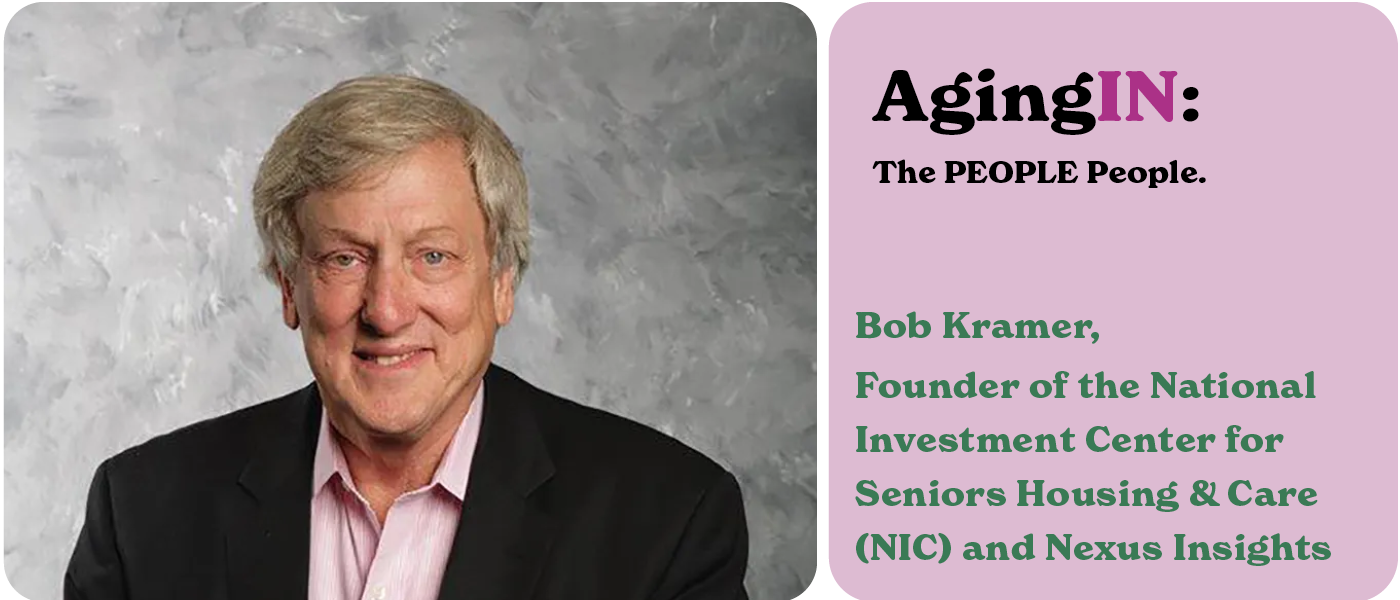
If you’re tuned into the world of senior living or just curious about how we’re rethinking aging in today’s society, you’re in for a treat. The aging services industry is at a turning point. With longer lifespans, shifting expectations, and growing demand for senior housing, leaders must rethink traditional models and embrace innovation. Bob Kramer, founder of the National Investment Center for Seniors Housing & Care (NIC) and Nexus Insights, has spent decades shaping this sector. In a recent discussion, Kramer shared his journey, insights, and vision for the future of senior living.
A Legacy of Leadership and Perspective
Kramer’s passion for aging services stems from his family legacy and early experiences. His career began as a pastor, transitioned into government roles, and ultimately led him to establish NIC, an organization that revolutionized senior housing by attracting private investment through transparency and data. Today, through Nexus Insights, Kramer continues to advocate for innovative senior living models that enhance the well-being of older adults.
Central to Kramer’s philosophy is the importance of listening and understanding diverse perspectives. He encourages leaders to become “multilingual,” to navigate the languages of policy, business, academia, and operations. This skill, he argues, is essential for driving meaningful change in a complex and evolving industry.
Challenges and Opportunities in Senior Living
Historically, senior living has focused on care during the final years of life. Kramer believes this model must evolve to meet the expectations of future generations. He introduces the concept of “next stage living,” lifestyle-driven communities that prioritize health, wellness, and engagement. These environments should not only extend lifespan but also improve health span, ensuring older adults live longer, healthier lives.
Affordability remains a pressing challenge. As demand for senior housing grows, the industry must develop solutions that balance quality with accessibility. Kramer emphasizes that innovation, not just incremental improvement, is key to addressing these issues.
Emerging Models and Market Trends
Kramer highlights several promising trends reshaping senior living:
- Active Adult Communities: Vibrant, wellness-focused environments for those seeking independence and social connection.
- University-Affiliated Retirement Communities: Opportunities for lifelong learning and intergenerational engagement.
- Multi-Generational Housing: Models that foster relationships across age groups and combat loneliness.
- Technology Integration: Tools that expand care navigation, support chronic disease management, and enhance quality of life.
These innovations reflect a broader shift toward prevention and personalization, ensuring older adults thrive, not just survive.
The Role of Public and Private Sectors
While public funding plays a role, Kramer stresses that private sector innovation is essential for scaling solutions. Removing regulatory barriers and fostering collaboration will be critical to meeting the needs of an aging population. He also points to the growing number of solo agers (individuals aging without family support) as a demographic that requires targeted strategies.
Longevity, Prevention, and Workforce Integration
As longevity increases, Kramer calls for a cultural shift that values older adults as contributors rather than dependents. Their experience and perspective are vital resources for the workforce and volunteer efforts. Prevention and chronic disease management must become central to senior living strategies, reducing costs, and improving quality of life.
Kramer also addresses societal biases that limit older adults’ participation. Overcoming these barriers will require intentional efforts to integrate older individuals into communities and workplaces.
Advice for Leaders
Kramer’s guidance for leaders is clear and actionable:
- Expose Yourself to Diverse Viewpoints: Engage with voices across policy, academia, and business.
- Learn to Be Multilingual: Understand the language and priorities of different stakeholders.
- Innovate Boldly: Disrupt positively while maintaining operational excellence.
- Foster Collaboration: Break down silos within organizations to spark creativity and challenge assumptions.
These principles, Kramer argues, will enable leaders to navigate uncertainty and seize opportunities in a rapidly changing landscape.
Looking Ahead
Despite challenges, Kramer remains optimistic. The future of aging services will be shaped by leaders who listen, innovate, and persevere. By embracing new models and valuing older adults, the sector can transform longevity into a shared opportunity–one that benefits individuals, families, and communities.
What do you think? Are you excited about these shifts in senior living?