
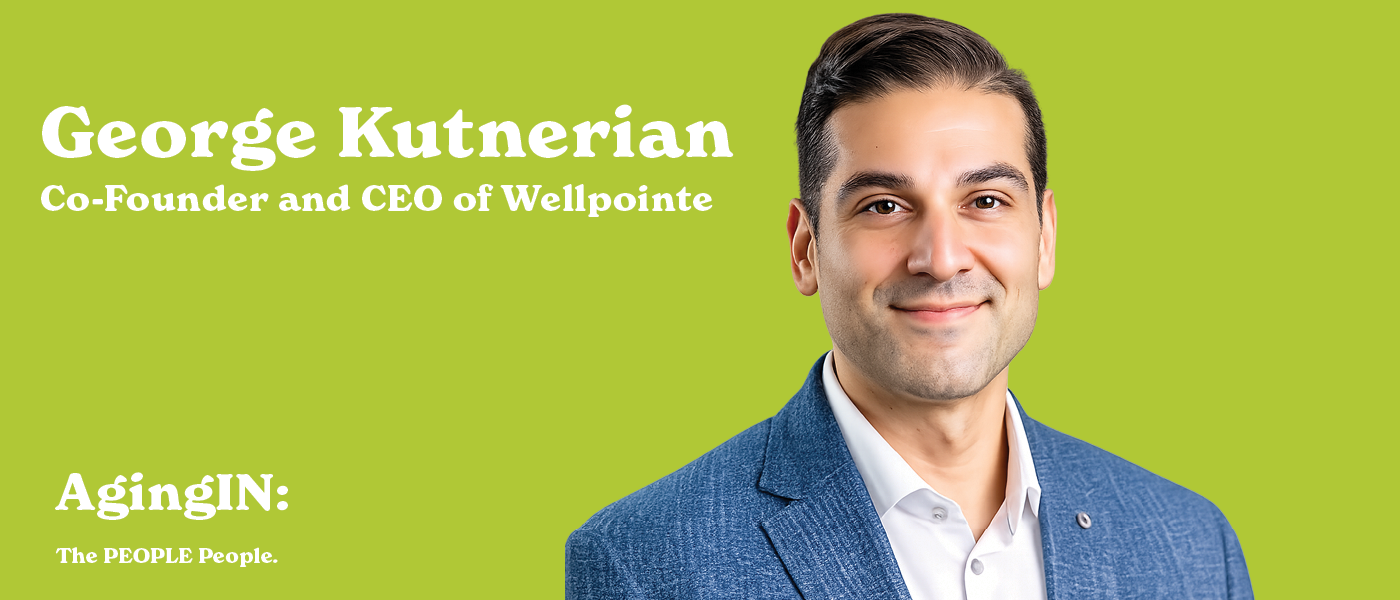
George Kutnerian once stood in front of a conference audience, put a photo of one of his homes on the screen, and asked everyone to find the sign identifying what kind of place it was. He let the silence stretch. Nobody could point to one, because there wasn’t one. “There is no sign,” he told them. Just a house on an ordinary street; the kind anyone might live in.
That absence is the whole idea. As Co-Founder and CEO of Wellpointe, the largest small-home residential operator in California with 67 licensed locations, Kutnerian has spent years arguing that the field made a mistake by leading with labels instead of leading with “home.” He told Susan Ryan on a recent episode of Elevate Eldercare that those labels carry a quiet message most people absorb without thinking. It says that this is where you go once you are no longer quite yourself. He would rather offer something else entirely: a next home rather than a last stop.
A House That Is Actually a House
Wellpointe’s core approach is adaptive reuse. The company buys an existing single-story ranch home priced at the local median, then spends roughly the purchase price rebuilding it down to the studs. An 1800 square foot house with three or four bedrooms becomes a six-bedroom home, including:
- Private bedrooms for all six residents, a standard he traces to dignity
- Widened hallways and door frames so wheelchairs can move freely
- Accessibility built into every bathroom and fixture
- An ordinary neighborhood, where residents can walk to the corner store
Furthermore, the homes are all clustered close together, so meals, upkeep, and staffing scale. This neighborhood integration is the part that Kutnerian lights up about. Residents go for walks, chat with neighbors, and live inside the fabric of a real community rather than on what Susan calls an “elder island.” One resident even asked to hold a yard sale in the front yard. Nobody had ever requested that before, and Kutnerian’s response was simply, “Why not?” It is a home after all, and a home has a front yard.
Staffed for Relationships, Not Silos
In a larger setting, the person who handles housekeeping, the one who manages medications, and the one who runs the kitchen are usually three different people. Wellpointe folds those roles into a single approach in which the same familiar team members cook meals, keep the house, and help with daily routines. The result is the kind of continuity that lets deep trust build between residents and the people they see every day. That trust matters most during the intimate moments of helping someone bathe or dress, which no one wants to navigate with a rotating cast of strangers.
The model proved itself under pressure. Through COVID, Wellpointe recorded no resident deaths, an outcome Kutnerian attributes to the design itself, which includes:
- Small, separate homes that kept any single outbreak contained
- The ability to isolate one location without affecting the rest
- Built-in porches and backyards that made safe visits possible
- A steady team that residents already knew and trusted
Coming out of those years, Kutnerian noticed something shift. “Social became the new amenity,” he said, and his homes were built for exactly that.
Aging Into Poverty
Wellpointe operates near 95% occupancy and works through public programs, including Medicaid home- and community-based services, managed Medicaid plans, and PACE. Therefore, the homes are not reserved for the wealthy. Kutnerian frames this as a public-private partnership, with the state funding access and operators like him delivering the supply.
He is candid that the bigger problem outstrips any single operator. Longevity, he argues, is quietly creating a new population of people who were never poor and have become so simply by living a long time. Pensions have largely vanished, long-term insurance policies have become scarce and expensive, and fixed incomes are not keeping up with rising costs. First-time homelessness after the age of 50 is now a pattern worth watching. He does not claim to have the full solution, but he insists that states stop treating it as the elephant in the room.
Housing Is the Next Frontier
The advocacy fight Kutnerian cares about most right now is getting policymakers to recognize these homes as permanent housing rather than something temporary. When he brings the model to housing officials, some call it transient. He pushes back every time, because people do not simply pass through these homes; they live in them, sometimes for years. He also helped build California’s small-home trade association, 6Beds, and he argues that housing and the services inside it should never have been split apart in the first place.
His vision for the next decade is to create more homes like this, but at a lower cost and within reach for more people. These homes will be redesigned for both cities and rural areas where a single-story ranch house is not practical. Above all, he wants the field to return to one question.
“It really comes down to the question, what is home?,” he said. “We’re trying to be home.”
Listen to the full conversation with George Kutnerian on Elevate Eldercare, available on Spotify and Apple Podcasts.