
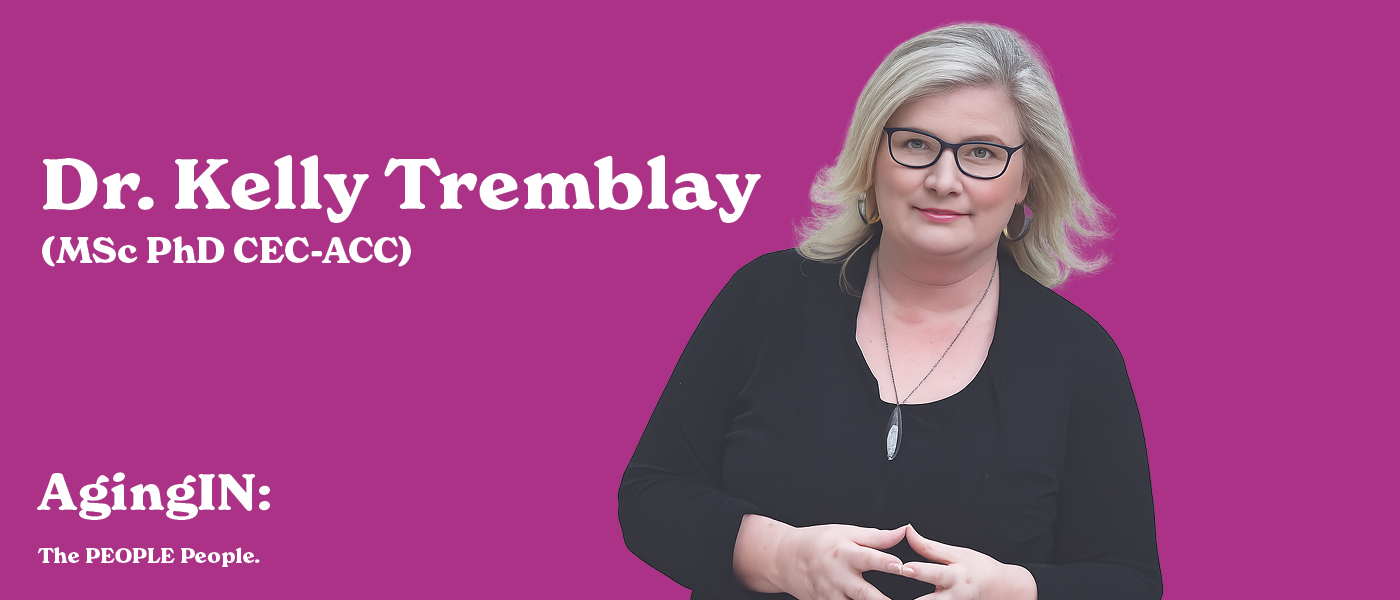
There’s a question buried inside all the noise about longevity, and Dr. Kelly Tremblay thinks it’s the only one that really counts. It doesn’t ask how long we can live, but rather how well we can live while we’re here. On a recent episode of Elevate Eldercare, the neuroscientist, audiologist, and World Health Organization (WHO) advisor sat down with Susan Ryan to make the case that the answer isn’t a mystery, and that much of it will be on the table this August at the AgingIN conference in Denver.
Tremblay is leading the Longevity Summit, a full-day pre-conference workshop on August 10, she will be discussing the reintroduction of the idea of healthspan. Healthspan, the years a person lives in good function rather than simply being alive, has become a buzzword again. This idea was already well established in the research literature of the 1960s, 70s, and 80s, long before it started trending on social media. What faded was public attention, not so much the science, evidence, or persistent dedication of experts in the field, which she is excited to share and hopes will empower attendees.
A Roadmap, Not a Hack
Tremblay believes the reason for healthspan resurgence is social media used as a main source for health information. Oftentimes, people’s news feeds are flooded with biohacking content, which places emphasis on cell biology and extending lifespan, and unfortunately, are usually extracted from unreliable sources. On the other side of this, however, sits decades of converging, peer-reviewed evidence that truly helps people stay mobile, connected, and engaged as they get older.
What she keeps returning to is that the most effective steps are rarely the expensive ones. She points to a 2025 study on a simple telephone program where trained callers reached older adults experiencing low mood, guiding them through reflective conversations about the meaning they had found throughout their lives. It cost very little to run, and it measurably improved people’s symptoms.
The importance of focusing on what works, rather than what gets attention, led Tremblay to create her Brain Bytes series. The episodes translate dense research into practical steps a person can act on tomorrow without having to download a 20-page paper.
The Framework Behind the Day
The summit is structured around ICOPE, short for Integrated Care for Older People, a WHO framework that Tremblay helped develop over roughly five years. Rather than organizing around disease, it organizes around function and what a person wants to keep doing. The example she likes to use is being able to dance at a granddaughter’s wedding, which sounds simple until you count everything it requires. The summit will work through those interlocking pieces:
- Mobility at age 89, from walking to a coffee shop to hiking
- Communication through hearing, vision, and the senses
- Cognition and mental well-being, including the latest on whether decline can be delayed
- Participation in the daily activities that bring a person joy
- Overall functional ability rather than a single diagnosis
“The pace of aging is outpacing the medical system’s ability to serve people as we grow older,” Tremblay bluntly explains. “It’s not meant for the chronic, slow, gradual decline of one or more of our health conditions.” So hospitals can handle the acute episodes well, like the broken leg or the cancer diagnosis, but the continuous interconnected decline of several systems at once tends to fall through the cracks between specialists.
Tools Anyone Can Carry Out the Door
True to AgingIN’s ethos, the summit is built so attendees leave with more than notes. The WHO’s open-source screening tools and resources available are deliberately designed for people without a medical degree, so that a volunteer, a nursing student, or a community worker can pick them up and use them. Tremblay is emphatic that these belong everywhere, not only in clinical settings, but in areas like the local YMCA and faith communities alongside residential settings. Once someone learns they didn’t pass a particular screening, that becomes their prompt to seek the right follow-up appointment.
The featured speakers also include Dr. Shelly Chadha of the WHO, opening the day, and Carmel Roques, Cabinet Secretary of the Maryland Department of Aging. Secretary Roques will share how her state is building a longevity-ready plan that other states pursuing multi-sector aging plans can learn from. Industry voices from MetLife and Cochlear will speak to healthier workplaces and biomedical innovation. Tremblay also wants researchers and volunteers in the room, as what she calls “citizen scientists,” to contribute to the conversation and become involved in future studies.
Heart and Head, Not One or the Other
Tremblay hopes that her audience will come away from her talk with a sense of balance. She sees too many people chasing either the human side or the technological side of aging while distrusting the other. The people drawn to human connection sometimes fear the tech, and the people drawn to tech sometimes forget the person. Her wish is that attendees leave having connected both the heart and the head, equipped to improve their own aging and the lives of the people they serve.
The conference opens August 11 with keynote speaker Manley Feinberg, a world-class mountaineer whose book Reaching Your Next Summit draws leadership lessons from the rock face. The second day opens with filmmaker Peter Murphy Lewis and his docuseries honoring the CNAs who carry so much of this work. Tech talks will pair innovators with the providers who use their tools, and a closing session, titled “Embracing the Ecosystem of Aging” will make the case for moving from silos to synergy. On Thursday, attendees will have the opportunity to visit either Senior Planet or a Green House community in Loveland.
The conference runs from August 10 through 13 in downtown Denver, and early-bird registration closes on June 30. Details and registration are on the AgingIN website.
Listen to the full conversation with Dr. Kelly Tremblay on Elevate Eldercare, available on Spotify and Apple Podcasts.