
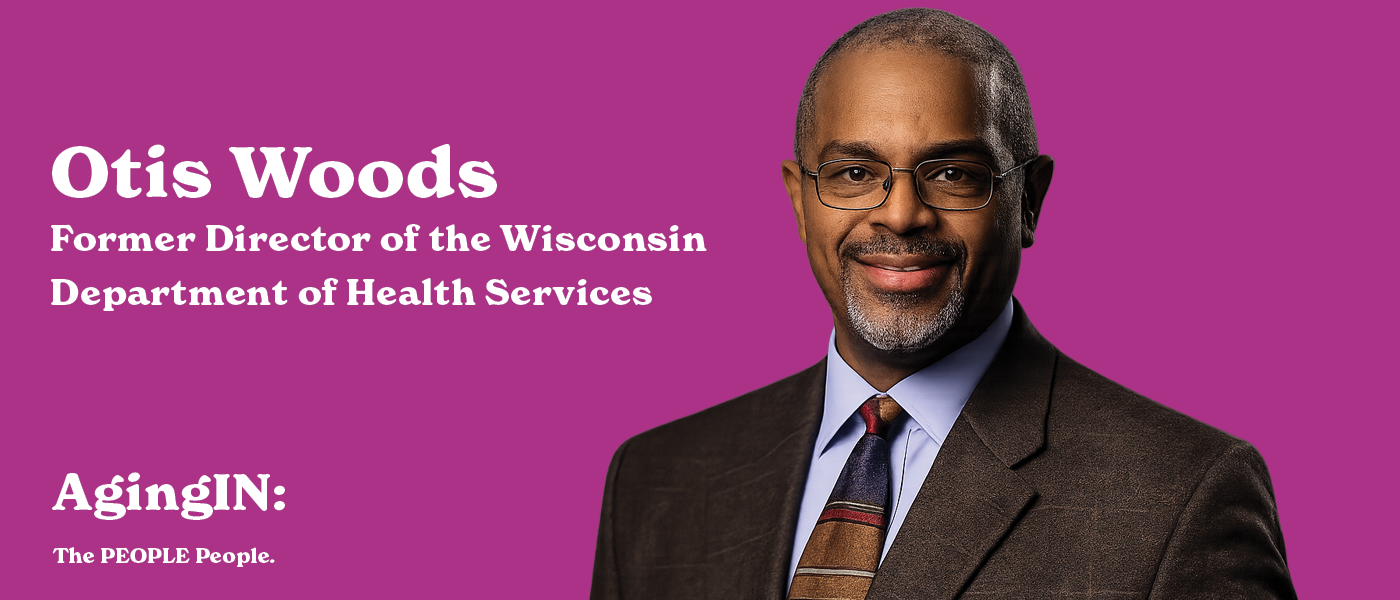
The aging services landscape is undergoing profound change, shaped by demographic shifts, workforce shortages, evolving healthcare models, and growing regulatory complexity. In a recent Elevate Eldercare podcast conversation, Otis Woods, former Director of the Wisconsin Department of Health Services, offered a clear and deeply experienced perspective on where the field has been and where it must go next.
With more than three decades of oversight, Woods brings together regulatory and operational understanding with an unwavering commitment to person-centered services. His core message is that the future of the aging sector depends on collaboration, clarity, and a renewed focus on each individual.
A Career Rooted in Service and Purpose
Woods did not begin his career in aging services. His early work focused on individuals with intellectual and developmental disabilities. That changed when he “began to be trained as a nursing home surveyor [and] the light came on.”
What struck him most were the voices of the residents. Their histories, vulnerabilities, and expectations made it clear that systems should be built around people rather than processes. Group interviews with centenarians and longtime members helped him see that these were not simply “patients,” but keepers of community history who deserved respect in a vulnerable stage of life.
That realization shaped his leadership philosophy and guided his rise to Director of the Wisconsin Department of Health Services, where he influenced age-related public policy and practice for decades.
The Power of Person-Centered Services
At the core of Woods’s work is a commitment to person-centered and person-directed living services. This approach prioritizes dignity and individual preference.
He aligns closely with the “culture change movement” and emphasizes that:
- Residents should have a meaningful voice in their daily routines.
- Programs should reflect personal histories, preferences, and lifelong rhythms.
- Quality of life is as vital as quality of care.
“People deserve dignity and respect that has been earned over a lifetime,” Woods notes.
He also warns that the culture change movement has lost momentum in some places. Revitalizing it is essential if we hope to meet the needs of today’s and tomorrow’s older adults.
The Three-Legged Stool
To explain his vision, Woods uses the model of a three-legged stool: The legs are regulators, providers, and advocates, including ombudsman programs. The person seated on the stool is the resident.
This three-legged stool model emphasizes that no single group can ensure quality living alone. It requires shared responsibility, open communication, and mutual understanding.
Woods also mentioned the positive effect this model has on the relationship between regulators and providers. While regulators must remain independent from providers in that they cannot “partner” with them, the two entities can collaborate to implement practices that work toward a goal. This approach can reduce the tension between oversight and operations.
Growth, Opportunity, and Risk
Where older institutional models had prioritized clinical oversight and round-the-clock monitoring, assisted living offered something more human. It was a social, community-based setting where people could age in place with greater autonomy and connection. The model resonated, and in Wisconsin alone, the sector grew exponentially, fueled in part by deliberate policy shifts to move people out of more intensive settings and into community life.
But that growth has outpaced the regulatory framework meant to govern it, because assisted living still lacks an official federal definition. As residents have aged in place and their health needs have grown more complex, the sector has quietly begun to resemble what it was built to replace. Woods warns that without a unified effort from regulators, providers, ombudsmen, and advocates to legally define what assisted living is today, that definition will default to Washington, on terms shaped by the very same outdated models the sector was designed to move beyond.
The Workforce Crisis
Across both assisted living and skilled nursing, the workforce crisis may be the defining challenge of the next decade.
Woods points to declining birth rates, an aging population, and heavy reliance on immigrant labor in many markets. These trends, combined with the physical and emotional demands of direct healthcare work, made a career in this field less sought after.
“Adequate is not enough,” he argues. The field needs a well-trained workforce that is valued and prepared for increasingly complex needs. Without serious investment in recruitment, training, and retention, no care model or policy reform will succeed.
Policy, Ownership, and Accountability
Woods also addresses the growth of ownership and finance in aging services. Private equity and real estate investment trusts are increasingly active in both skilled nursing and assisted living. Their involvement raises questions about how financial incentives align with resident well-being.
He urges better sharing of ownership information across states so that regulators can identify problematic operators who shift from one jurisdiction to another. He also calls for policies that balance innovation and investment with clear accountability for resident outcomes.
Innovation Through Collaboration
Throughout his tenure, Woods championed collaborative initiatives that reached beyond traditional oversight.
Examples include:
- A statewide infections coalition that brought together regulators, clinicians, and public health experts
- An annual conference that seated providers, regulators, ombudsmen, and Medicaid officials at the same tables to learn from the same experts
- A stakeholder-driven approach to Civil Monetary Penalty funds that supported programs like Music & Memory, Cycling without Age, and caregiver workforce initiatives
These efforts modeled a way of working in which each sector kept its distinct role, yet all aligned around the resident.
A Vision and a Call to Action
When asked what he would prioritize with a “magic wand,” Woods listed:
- Restore culture change as a foundation for both assisted living and skilled nursing.
- Build and sustain a well-trained, stable workforce.
- Draw clear lines between assisted living and skilled nursing, with appropriate standards for each.
- Strengthen oversight of ownership and financial structures.
- Expand collaboration across the continuum, including hospitals and home-based care.
Above all, he calls the field to act together.
“Come together, and check egos at the door. Someone is counting on you,” he says.
The future of aging services will be shaped by the choices we make now about workforce, regulation, ownership, and health philosophy. Woods’s experience is a reminder that while systems and structures matter, the goal remains constant.
Every person should be able to live with dignity and purpose, wherever they call home.